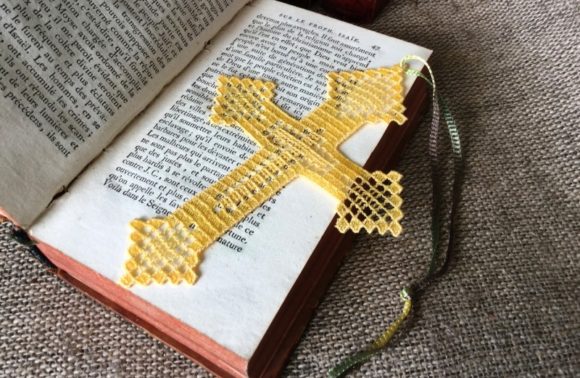
Cross Bookmark: A Designer’s Review for Branded Merch
As an embroidery designer who has spent years digitizing patterns and consulting with small business owners, I approach every new machine embroidery design with a critical eye. It is not just about whether a pattern looks pretty on a screen; it is about how it performs in the real world of commercial production. Recently, I evaluated the Cross Bookmark, a free-standing lace (FSL) Christian bookmark design marketed for religious occasions like Baptism, Easter, Christmas, and First Communion. While its primary description suggests a delicate gift item, my review focuses on its potential utility for small business merchandise, branded patches, and custom apparel.
First Impressions: Elegance Meets Functionality
The immediate visual impact of the Cross Bookmark is one of refined elegance. The description notes that the cross Bible embroidery machine pattern looks handmade, which is a crucial selling point in today’s market where consumers crave authenticity. For a boutique owner or an Etsy seller, this "handmade" aesthetic adds perceived value. The design does not scream loud or aggressive branding; instead, it offers a subtle, decorative touch that feels premium and classic.
From a design perspective, the free-standing lace technique implies a certain level of sophistication. FSL requires precision, and when executed well, it creates a texture that stands out against flat fabrics. This makes the Cross Bookmark feel less like a standard logo and more like a piece of art. For brands in the faith-based sector, wedding industries, or high-end craft markets, this visual personality aligns perfectly with a brand identity centered on tradition, care, and spiritual significance.
Real-World Business Applications Beyond Bookmarks
While the product is categorized under Baptism and described as a bookmark, limiting its use to paper markers would be a missed opportunity for creative entrepreneurs. Here is how I see this embroidery file performing in various commercial contexts:
- Embroidered Patches: By treating the FSL design as a standalone element, you can create intricate lace patches. These can be sewn onto tote bags, journal covers, or denim jackets. The openwork nature of lace allows the background fabric to show through, creating a layered, high-end look.
- Custom Apparel and Aprons: For businesses like bakeries, florists, or bridal boutiques, adding a small Cross Bookmark motif to an apron pocket or sleeve can serve as a subtle brand accent. It signals attention to detail without overpowering the uniform.
- Tote Bag Design: Religious bookstores or church gift shops can use this design on canvas tote bags. The contrast between the sturdy canvas and the delicate lace embroidery creates a tactile experience that customers love.
- Event Merch and Gifts: Beyond individual sales, this design is ideal for bulk orders for First Communion or Confirmation events. It serves as a memorable keepsake that enhances the event’s brand identity and emotional resonance.
Technical Considerations for Production
Transitioning from a digital concept to a finished product requires careful technical planning. Free-standing lace designs are notoriously sensitive to tension and stabilizer choices. Here are my practical notes for ensuring quality control:
- Stabilizer is Key: FSL designs require a water-soluble stabilizer that is robust enough to hold the stitches during embroidery but dissolves cleanly afterward. Skimping on stabilizer quality will result in a flimsy or distorted final product.
- Thread Color Contrast: Since the design relies on the interplay of light and shadow through the lace holes, thread choice matters. White or cream threads offer a classic, pure look suitable for Baptism gifts. However, testing darker thread colors can reveal if the design holds its structural integrity when the visual weight changes.
- Test on Real Fabric: Before committing to a large run of small business merch, always stitch out a sample. Check how the lace edges feel against the skin if used on apparel, or how durable they are if handled frequently as a bookmark.
- Hoop Size and Density: Verify the hoop size requirements in the file details. Ensure your machine can handle the specific dimensions without re-hooping, which can misalign delicate lace patterns. Also, inspect the stitch density; if it is too dense, the lace may become stiff rather than flexible.
Where to Use Caution
Not every application is suitable for this specific design. Because it is an FSL piece, it lacks the backing of traditional satin-stitch patches. Therefore, it may not withstand the rigorous washing cycles required for staff uniforms in high-turnover environments like cafes or retail stores unless applied with extreme care and protective backing.
Additionally, avoid using this design on highly textured fabrics where the lace might get caught or lose its definition. It is best suited for smooth surfaces like cotton, linen, or canvas. If you plan to use it as a chest logo accent on caps, ensure the curvature of the cap does not distort the linear elements of the cross. Curved surfaces can twist FSL designs, so flat applications like tote bags or book covers are safer bets.
Enhancing Brand Identity and Customer Trust
Incorporating a design like the Cross Bookmark into your product line does more than add decoration; it builds trust. When customers see intricate, well-executed embroidery, they associate it with quality and professionalism. For handmade brands, this translates to higher price points and increased buyer engagement.
Using such a specific, meaningful symbol also helps in niche marketing. It signals to your audience that you understand their values and traditions. Whether you are creating custom apparel for a church group or designing design assets for a religious publisher, the consistency of using high-quality embroidery reinforces your brand’s commitment to excellence.
Final Verdict for Designers and Sellers
The Cross Bookmark is a versatile asset for the right niche. It is not merely a bookmark but a potential cornerstone for a line of faith-based merchandise. However, success depends on proper execution. Always create a printable mockup for client approval before stitching. Compare it beside other design assets to ensure visual consistency across your catalog.
Before purchasing, confirm the commercial licensing terms. Ensure the digital embroidery file includes the formats compatible with your machines. Check if the stitch count and color stops are optimized for speed if you are producing in bulk. By treating this design with the professional rigor it deserves, you can transform a simple pattern into a profitable component of your commercial embroidery strategy. Whether for a Baptism gift or a boutique’s signature tag, this design offers the blend of tradition and craftsmanship that modern consumers seek.